How Black Tax and Your Friends May Be Quietly Keeping You Broke
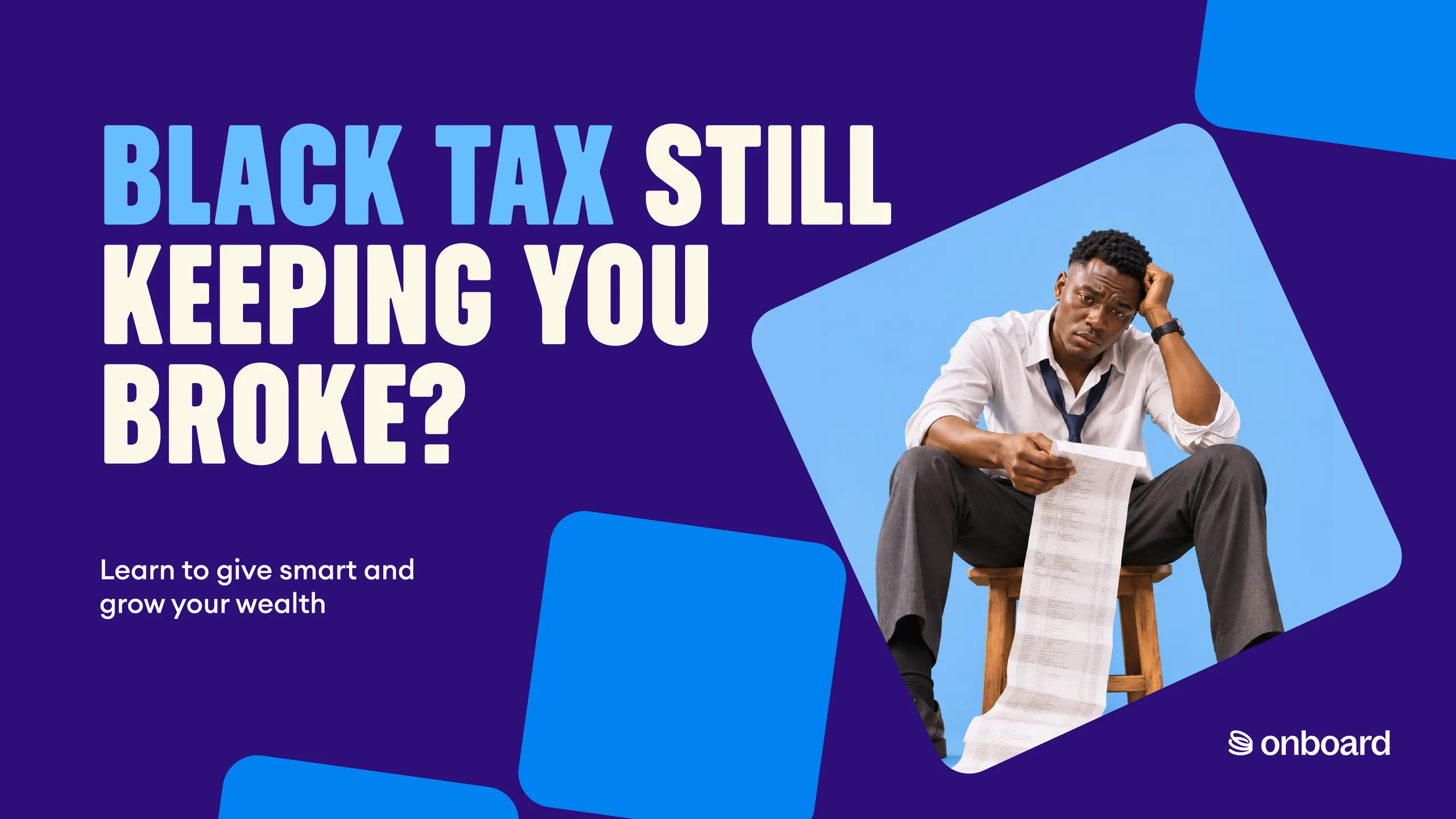
"Bro, please can you send me urgent ₦25,000? Something came up."
"Guys! The budget for Darcy’s bridal shower is $50 per head. Please send your contributions to the group account before Friday and prepare for our trip to Greece!"
"Good morning my child, your younger sister needs Rp142,000 for her university handouts and hostel balance."
If your phone buzzes with a WhatsApp notification and your chest tightens before you even unlock the screen, you are not alone.
Most financial advice online tells you that you are struggling because you order food on Chowdeck or Uber Eats. But for young working professionals, that narrative is completely out of touch.
You are not going broke because you are reckless with your money. You are going broke because you are caught in a quiet financial squeeze between two relentless forces: Black Tax and the Group Chat Tax... and, well, global inflation, which just keeps getting worse.
The Weight of Duty: Understanding Black Tax
Let us talk about Black Tax first, because it is the heavier of the two.
Across African households, Black Tax is the unwritten, unspoken financial responsibility that falls on anyone who manages to land a decent job or build a working business. It is rooted in a deep collectivist culture, mutual survival, and "respect." It is the money you send back home to your parents to "pay it back," your younger brother’s school fees, a cousin’s medical emergency, or an uncle’s rent.
Many of us wear this responsibility like a badge of honour. After all, our families sacrificed everything to get us through school—life, even—and give us a fighting chance. Supporting them can feel necessary and noble.
However, there is a very fine line between being a supportive family member and becoming a human ATM.
The problem with Black Tax is that it is rarely budgeted for. It arrives unannounced in random WhatsApp DMs as "urgent ₦10,000" or "urgent ¢17,000" requests. Before you even touch your salary to invest in your own future, a massive chunk of your income has already vanished into family obligations.
You look successful on paper, but in reality, you are living payday to payday while also financing everyone else’s survival. Sounds relatable?
The Social Pressure: The Group Chat Tax
Then comes the second layer of the squeeze: the Group Chat Tax.
While Black Tax comes from a place of duty and family survival, the Group Chat Tax comes from a place of social obligation and the subtle fear of missing out.
It starts small:
- Booking an expensive shortlet for the weekend because "everyone in the squad is going to see Aniko at Group Therapy."
- Splitting a bill equally in an upscale restaurant.
- Chipping in ₦20,000 for a friend's birthday or housewarming gift.
Saying no to family feels like ingratitude, and saying no to your friends feels socially terrifying. You worry about being labelled stingy, broke, or a bad friend.
So, to avoid five minutes of social awkwardness, you type "Sent!" into the group chat, transfer the funds, and silently panic about how you are going to survive the last ten days of the month.
Between paying Black Tax to honour your roots and paying the Group Chat Tax to keep your social life alive, you are left with little margin to build your own safety net, save for a home, go on that trip, or invest in a recently released IPO that has turned everyone on the internet into co-owners.
The Mindset Shift: Love Needs Boundaries
Here is a hard truth we all need to accept: You cannot pour from an empty cup.
Supporting your family and showing up for your friends are both beautiful things. But doing so without clear boundaries is financially dangerous. If you go broke trying to save everyone else, who is going to save you?
Setting financial boundaries is not being selfish, wicked, or arrogant.
It is about self-preservation. But before you can set firm boundaries with your parents or your group chats, you need complete clarity on where your money is actually leaking.
Spotting the Leaks with Your Cash Balance Statement
You cannot fix what you do not track. Most people think they know where their money goes, but micro-transfers have a sneaky way of hiding in plain sight.
Those quick funds you spend here and there do not feel heavy when you send them individually. But added up over 30 days—or over 365 days—they represent a massive financial drain.
This is where your Onboard Cash Balance statement becomes your ultimate reality check.
Instead of guessing why your account feels empty two weeks after payday, open your Onboard app and pull up your Cash Balance statement. Spend ten minutes reviewing your recent transaction history line by line—checking where you converted to your local currency, what you used it for, or in this case, who you sent it to.
Seeing the raw numbers laid out clearly removes the emotional fog. It replaces guilt with objective data. You might realize that while you thought you were spending a small amount on family support, you actually transferred way more in micro-requests over the month. You might discover that group chat contributions are quietly costing you a chunk of your income every single month.
Once you have this data from your Onboard Cash Balance statement, setting healthy boundaries becomes remarkably straightforward:
- For Black Tax: Give yourself a hard "Giving Ceiling" in your monthly budget (e.g., $50, $200, or $500 total per month). Once that cap is reached, learn to say gently: "I have hit my budget limit for this month, but I can help with that next month."
- For the Group Chat: When an expensive plan comes up that does not fit your goals, check your balance and comfortably say: "I will have to skip the dinner this time around!"
Your financial future belongs to you, not your extended family demands or your WhatsApp group chats.
Take a look at your Onboard Cash Balance statement today, get clear on where your funds are going, and start building real wealth on your own terms.


Related Articles
Your borderless life awaits.