FX infrastructure is the underlying system of licensing, liquidity, settlement rails, and pricing technology that lets a business move and convert money across currencies and borders.
It's what sits behind the scenes every time a business pays an international supplier, collects from a customer abroad, or holds a balance in more than one currency. Most businesses never interact with it directly.
They just notice when it works, and they definitely notice when it doesn't.
What FX infrastructure actually includes
The term covers five distinct pieces working together, not one single product. Here's what each one means, and what it looks like when it's done properly.
Licensing and regulatory registration
This is the legal permission to move money in a given market. Without it, a company can't operate as a payment provider there, no matter how good its technology is.
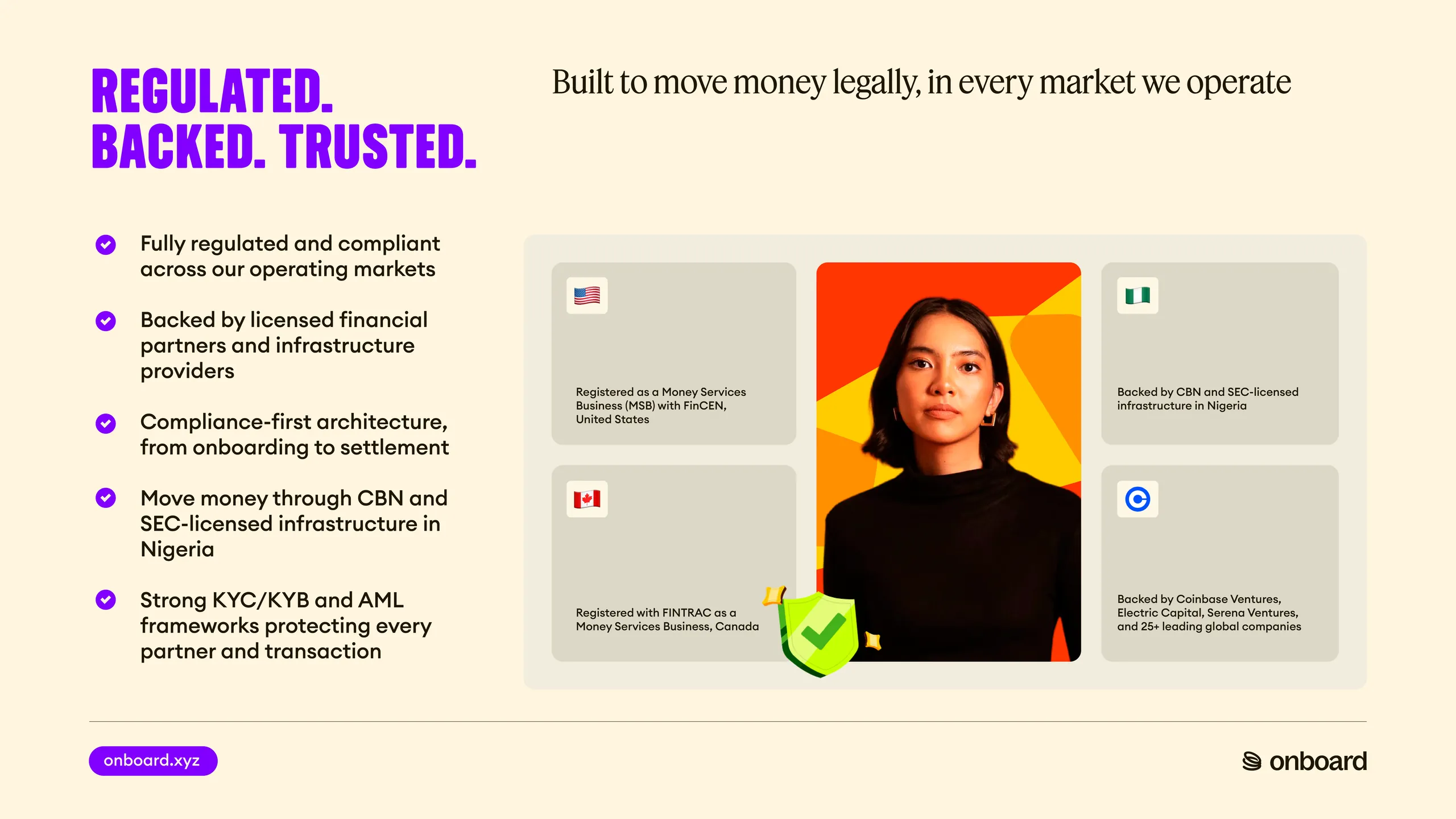
Onboard is registered as a Money Services Business with FinCEN in the United States and with FINTRAC in Canada, and moves money through CBN and SEC-licensed infrastructure in Nigeria. Strong KYC, KYB, and AML frameworks sit underneath all of it, protecting every partner and every transaction, not added on as an afterthought.
Liquidity
Liquidity is having enough of each currency on hand to actually settle a payment, rather than waiting on someone else to have the funds available. This is usually the hardest part of FX infrastructure to fake.
Onboard has processed over $300 million in total volume for more than 30,000 registered users transacting across 100+ countries, on the same rails now being opened up to business partners. That's not liquidity built to launch a new product. It's liquidity that was already running at scale before anyone outside the company touched it.
Settlement rails
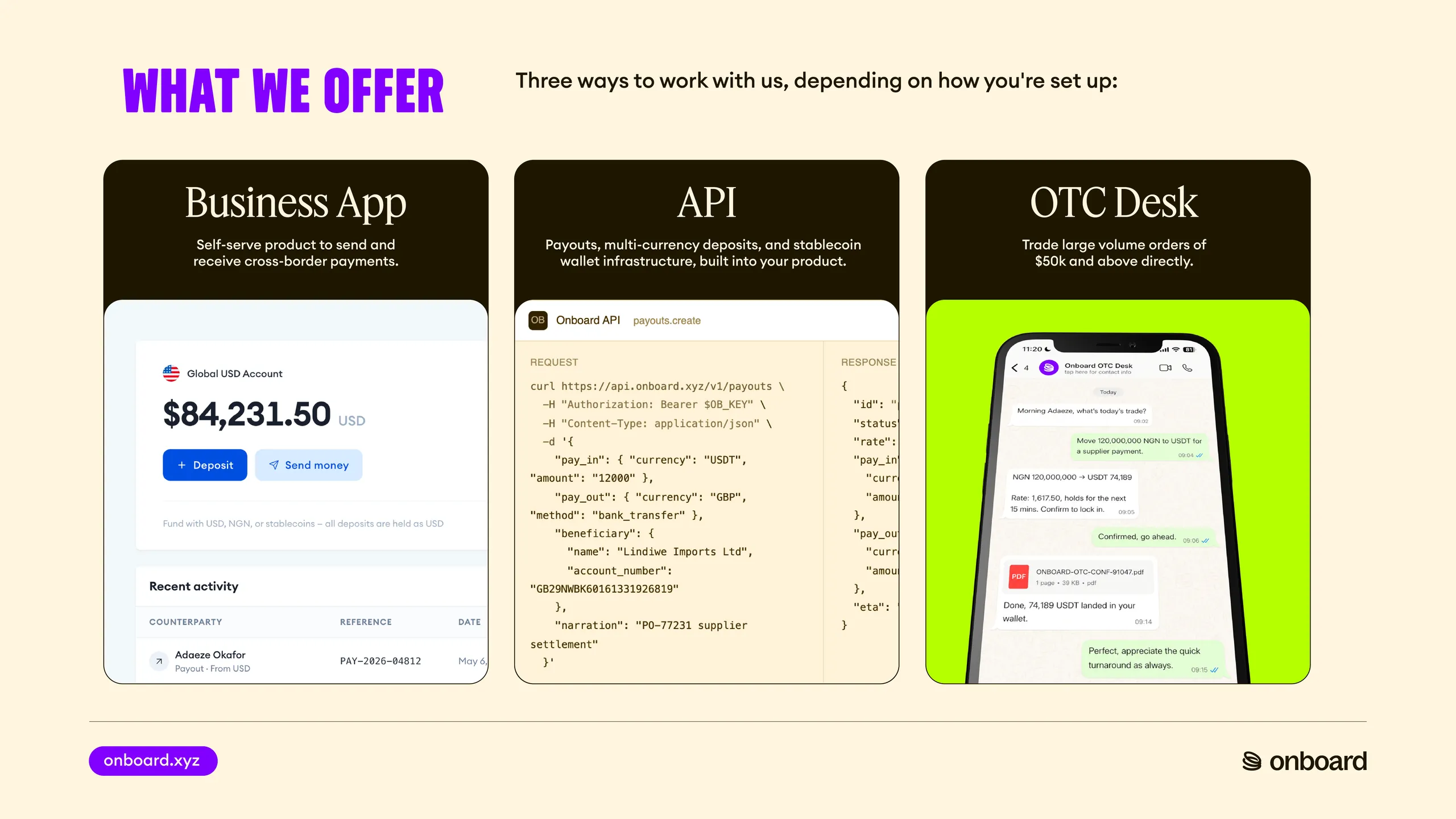
These are the actual pathways money travels through, whether that's a bank transfer, a card network, or a stablecoin settlement. Onboard runs three distinct rails depending on how a business is set up:
- The Business App, a self-serve account for collecting and paying out globally.
- The API, for fintechs and platforms building payment infrastructure directly into their own product.
- The OTC Desk, for businesses trading high volumes that need negotiated, locked rates.
Rate and pricing systems
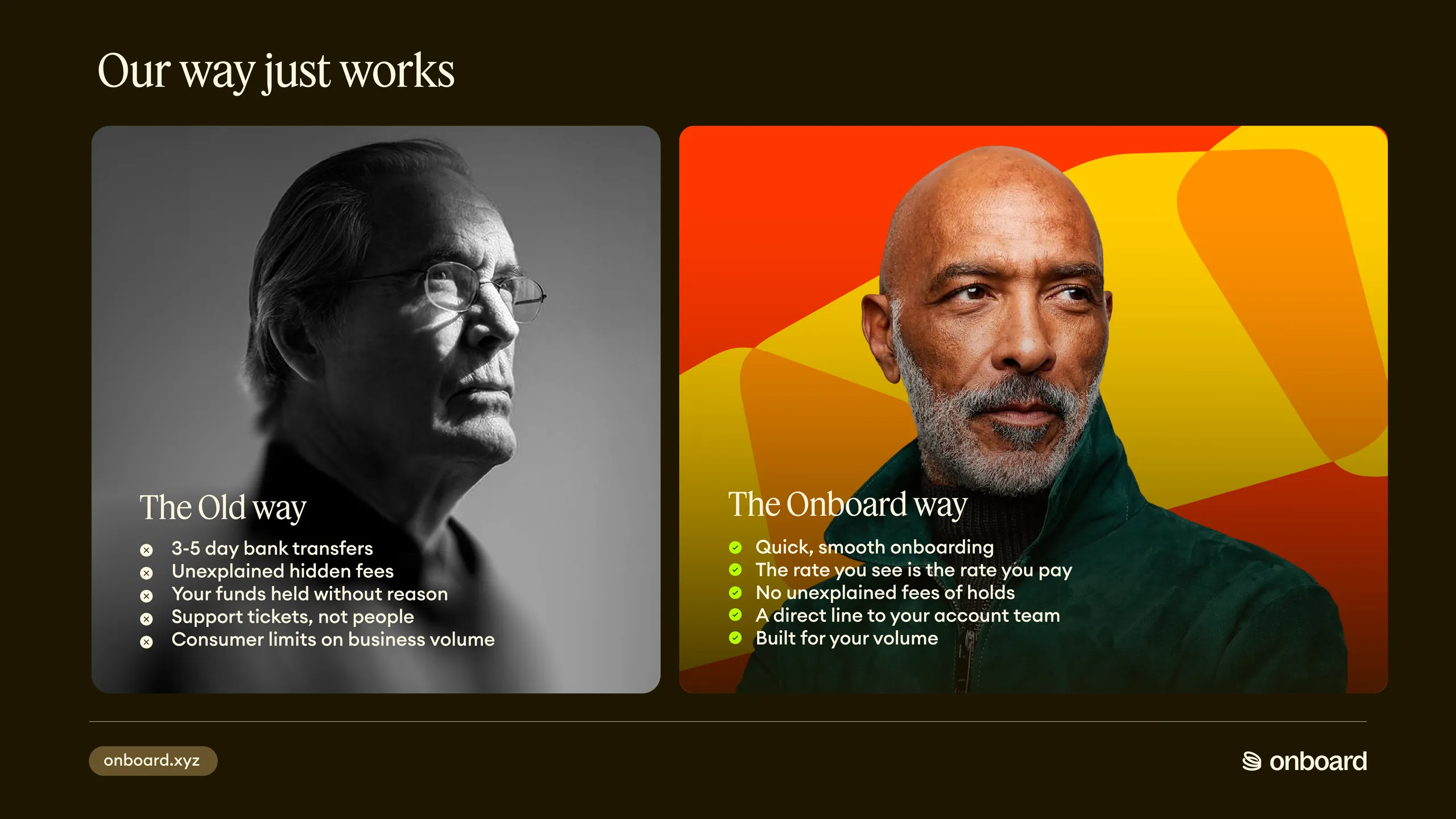
This is how a provider determines and applies the exchange rate at the moment of conversion, and it's where a lot of traditional infrastructure quietly loses trust. The old way of moving money internationally usually means 3 to 5 day bank transfers, unexplained fees buried in the rate, and funds held without a clear reason.
Onboard's pricing system works the other way: the rate shown is the rate paid, with no unexplained fees or holds, and OTC trades lock in a firm quote so the number agreed to is the number that actually settles.
APIs and interfaces
This is the software layer a business or developer actually connects to. It ranges from a simple self-serve app to a full set of API endpoints.
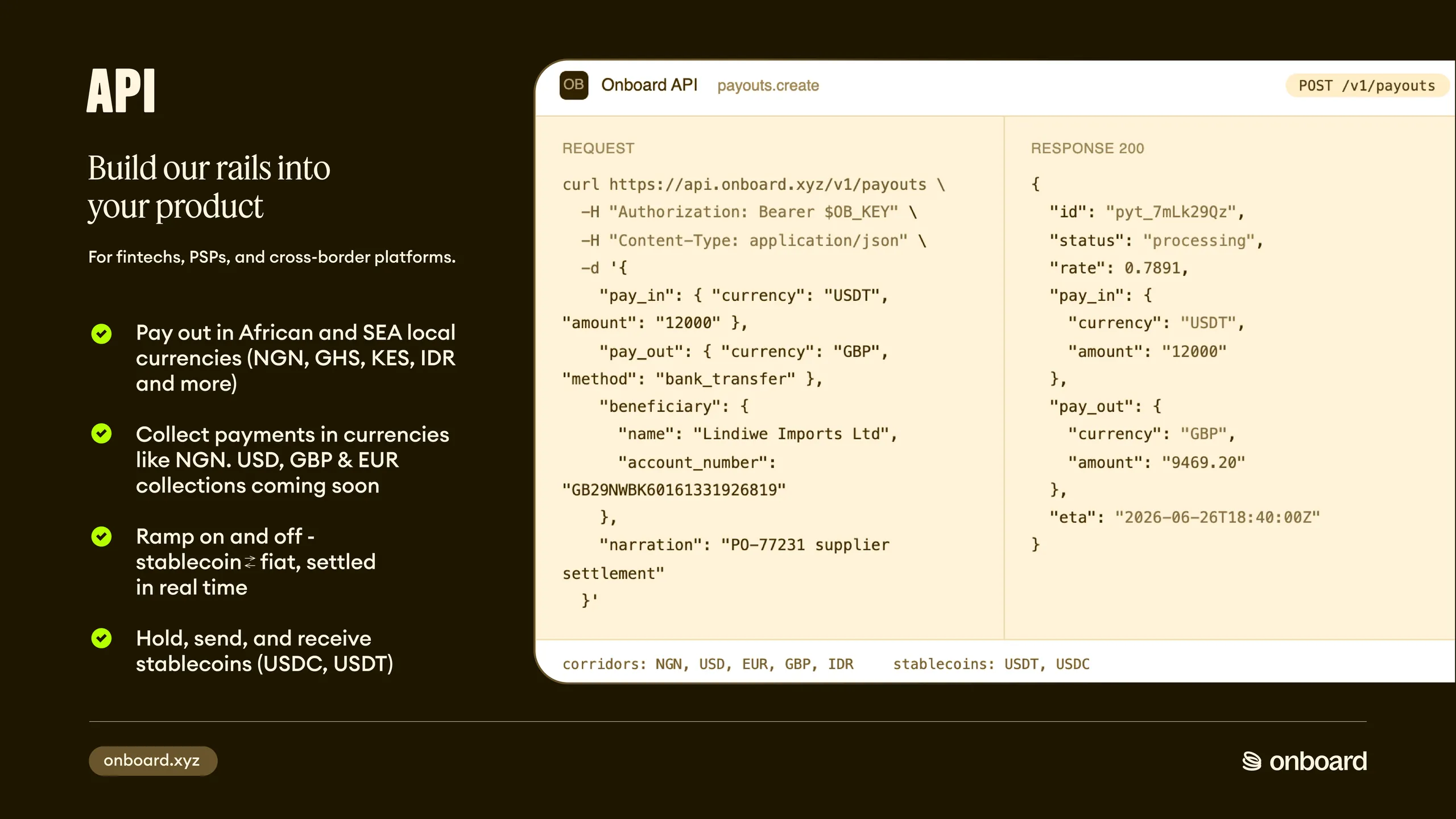
Onboard's API documentation lives at docs.onboard.xyz, covering payout creation, multi-currency deposits, and stablecoin wallet infrastructure for teams building on top of the rails directly.
Why this matters, wherever your business is based
Every business that pays across borders eventually runs into the same wall, regardless of where it's registered. A payment routes through several intermediary banks before it reaches its destination. Each one can take a cut and add a delay. The exchange rate quoted isn't the rate actually applied.
None of this is a regional problem. It's what happens when FX infrastructure is inherited rather than built with intention. The difference shows up clearly side by side:
- The old way: multi-day transfers, hidden fees, funds held without explanation, support tickets instead of people, consumer-grade limits applied to business volume.
- A properly built alternative: fast settlement, a rate that's transparent from the start, no unexplained holds, a direct line to an account team, and infrastructure sized for real business volume rather than personal transfers.
How Onboard fits into this
Onboard is built as FX infrastructure for businesses moving money globally, across three products:
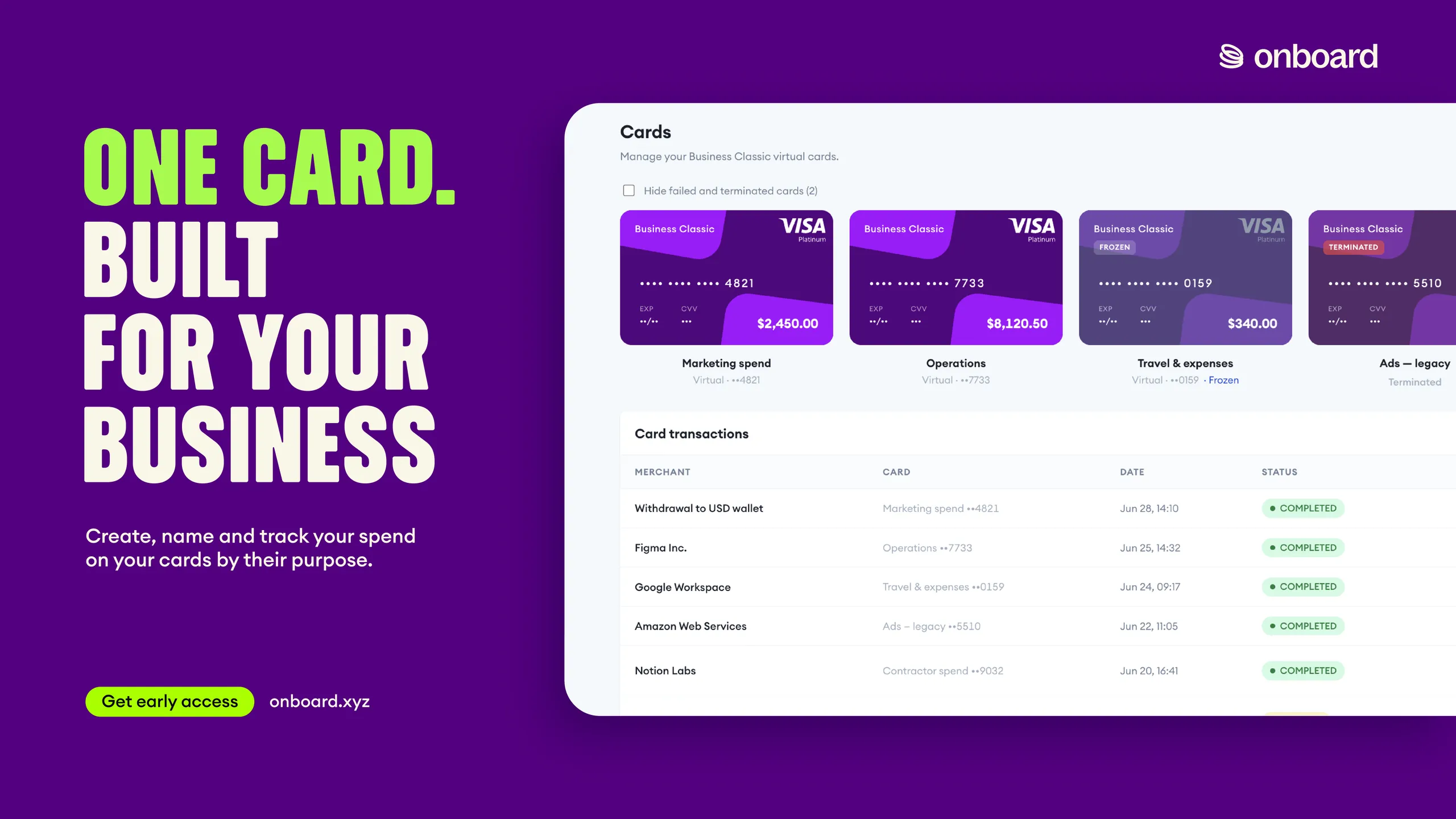
- The Business App lets a business collect and pay out in USD, EUR, GBP, and many other local and global currencies, alongside stablecoins (USDC and USDT). It also includes corporate cards for teams that need to spend globally without opening a separate card program, along with instant conversion between local and global currencies inside the same account.
- The API gives fintechs, PSPs, and cross-border platforms payout, multi-currency deposit, and stablecoin wallet infrastructure to build directly into their own product. Full technical documentation, endpoints, and integration guides are available at docs.onboard.xyz.
- The OTC Desk is built for businesses trading $50k and above that need a firm, negotiated rate instead of standard account pricing, traded over a dedicated channel like WhatsApp, Slack, or Telegram.
If you're trying to understand whether your business needs a self-serve account, an API, or an OTC relationship, that usually comes down to volume and whether you're building your own product on top of the rails or just using them directly. Book a quick call and we can help you figure out which one fits.
To see how this plays out for a specific use case, take a look at how importers can avoid losing money to hidden FX fees on international supplier payments, or explore the Business App directly.


Related Articles
Your borderless life awaits.